

Tobacco had long been considered an essential companion of the French soldier. Its distribution to the troops dated back to the reign of Louis XIV, the first to order free tobacco for men under arms. The quality was poor, but the intention was clear: tobacco was expected to sustain morale. In that respect, little had changed by the time of the First World War.
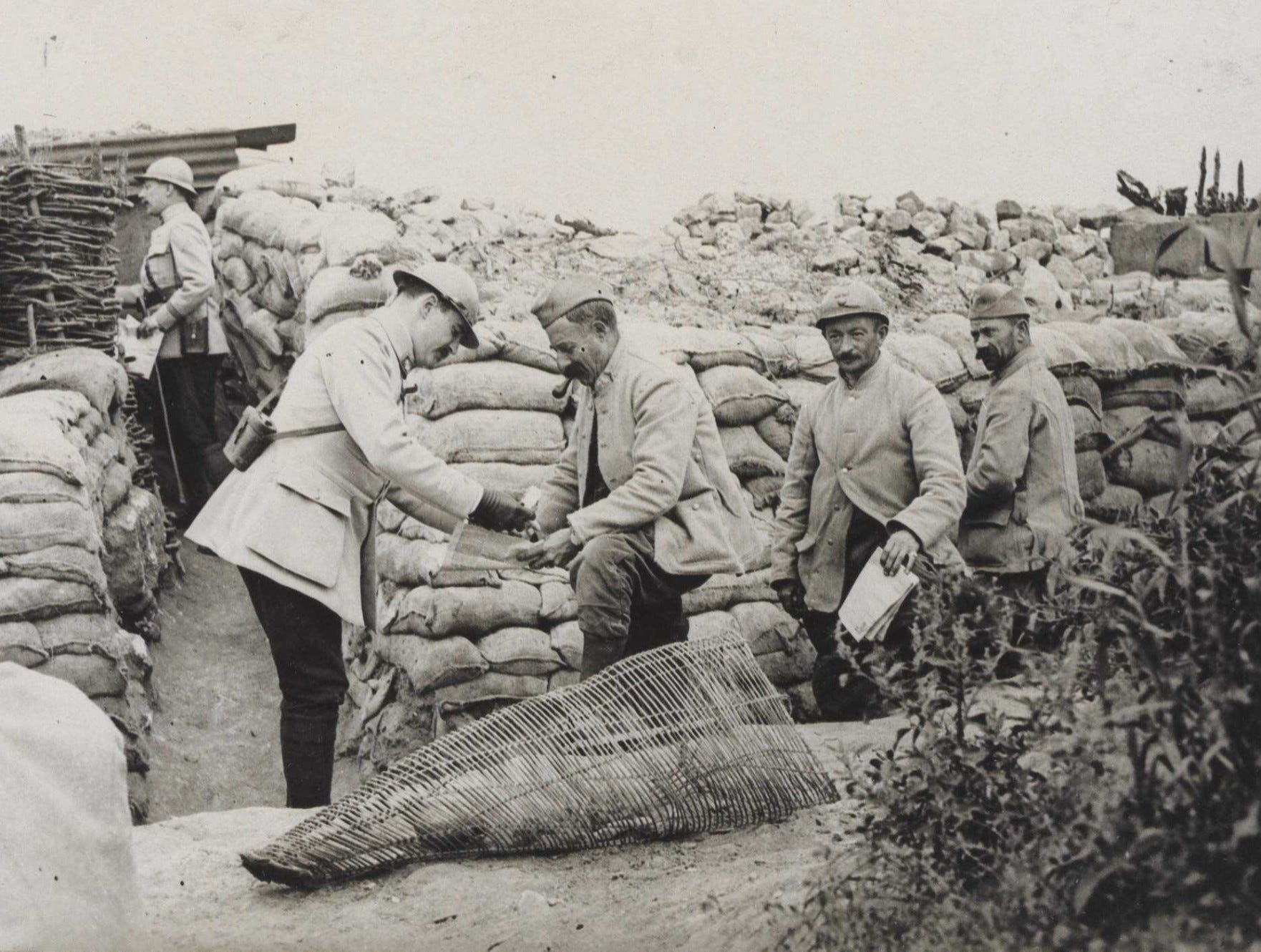
The tobacco issued to the army was known among the Poilus as gros, rough, dark, and of the lowest grade. It was coarsely cut, harsh on the throat, and sometimes still contained plant stems. Yet Poilus were nothing if not resourceful. They learned to break it down, chop it finely, and roll it into cigarettes. This tobacco was free. Each soldier received an official 20-gram packet whenever he collected his ration. However, better-quality tobacco could be purchased privately in villages and towns behind the lines. These shops were operated by civilians, but were approved sellers by the state, as tobacco production and distribution were tightly controlled by the government
Before 1914, France consumed around 45,000 tonnes of tobacco per year. By 1918, consumption had doubled. France, however, had never been self-sufficient. The world’s main tobacco producers were the United States, British India, and Eastern Europe, particularly Hungary and Russia and France relied heavily on imports to meet demand. The war dealt a severe blow to domestic production, as agricultural labour was drained by mobilisation.
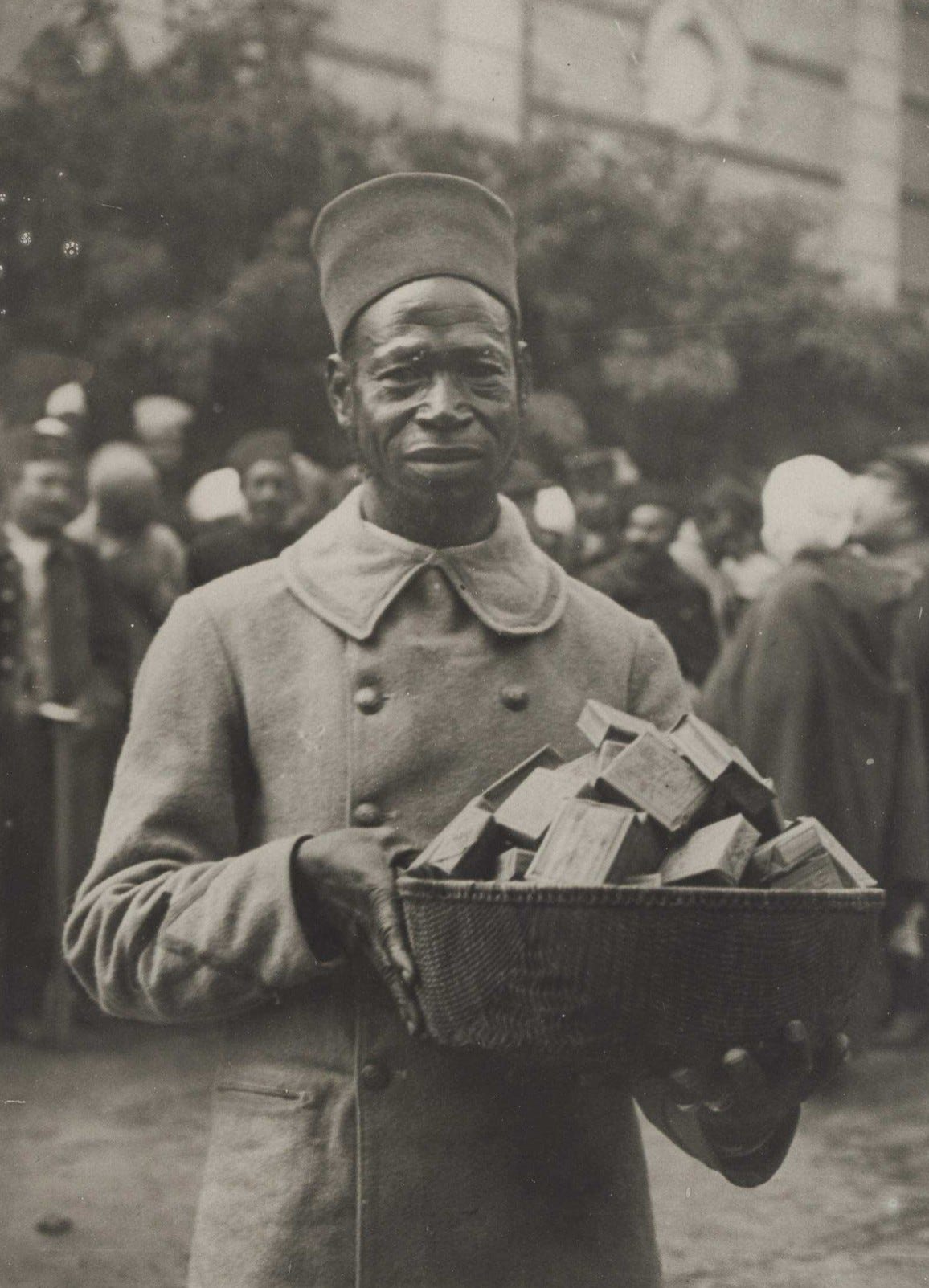
Getting tobacco to the front was itself a logistical challenge. Imported tobacco crossed the oceans by steamship in large wooden casks, before being transported by rail or motor vehicle under heavy guard to rear-area depots. From there, the final and most dangerous leg began. Horse-drawn wagons, carts, and even donkeys carried sacks of tobacco towards the trenches. Its arrival was awaited with almost as much anticipation as the mail. Unloading and distribution fell to the hommes de soupe, the men tasked with bringing food and supplies forward.
At the beginning of the war, French soldiers were more likely to smoke pipes than cigarettes. But the realities of trench warfare quickly made pipe smoking impractical. Pipes were difficult to keep dry; relighting them in darkness could be dangerous; and they required time and space that the trenches rarely allowed. Cigarettes, by contrast, were small, quick to light, and could be smoked rapidly, even in mud and rain. They were simply better suited to life at the front.
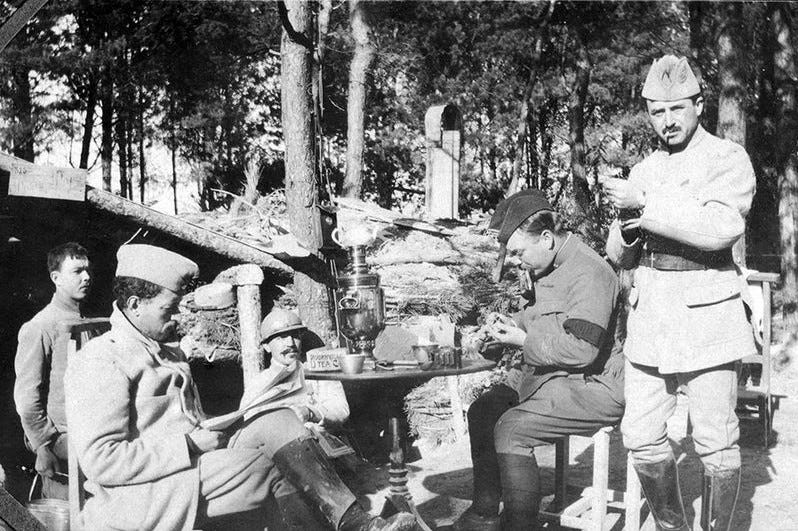
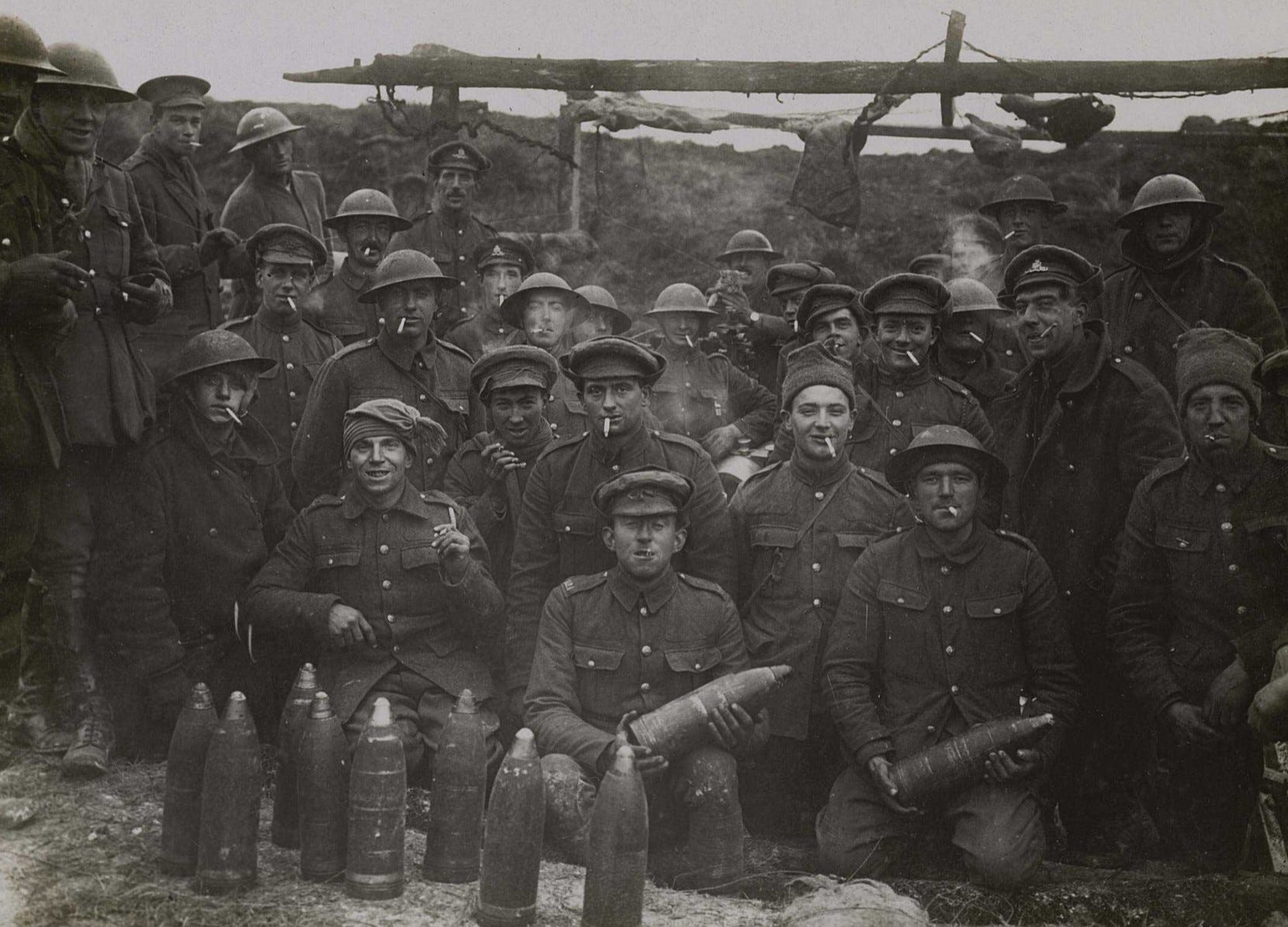
Like wine, tobacco was seen as essential to making life bearable. Smoking together helped build bonds between men. It filled empty hours, eased stress and anxiety, and offered moments of escape.
My Great Grandfather wrote on 19th October 1915:
Quand cela me prend, je fume une cigarette en m’efforçant de penser aux jours heureux passés tous les deux et où l’on faisait de beaux rêves.
“When I feel low, I smoke a cigarette and try to think of the happy days we spent together, when we dreamed of the future.”
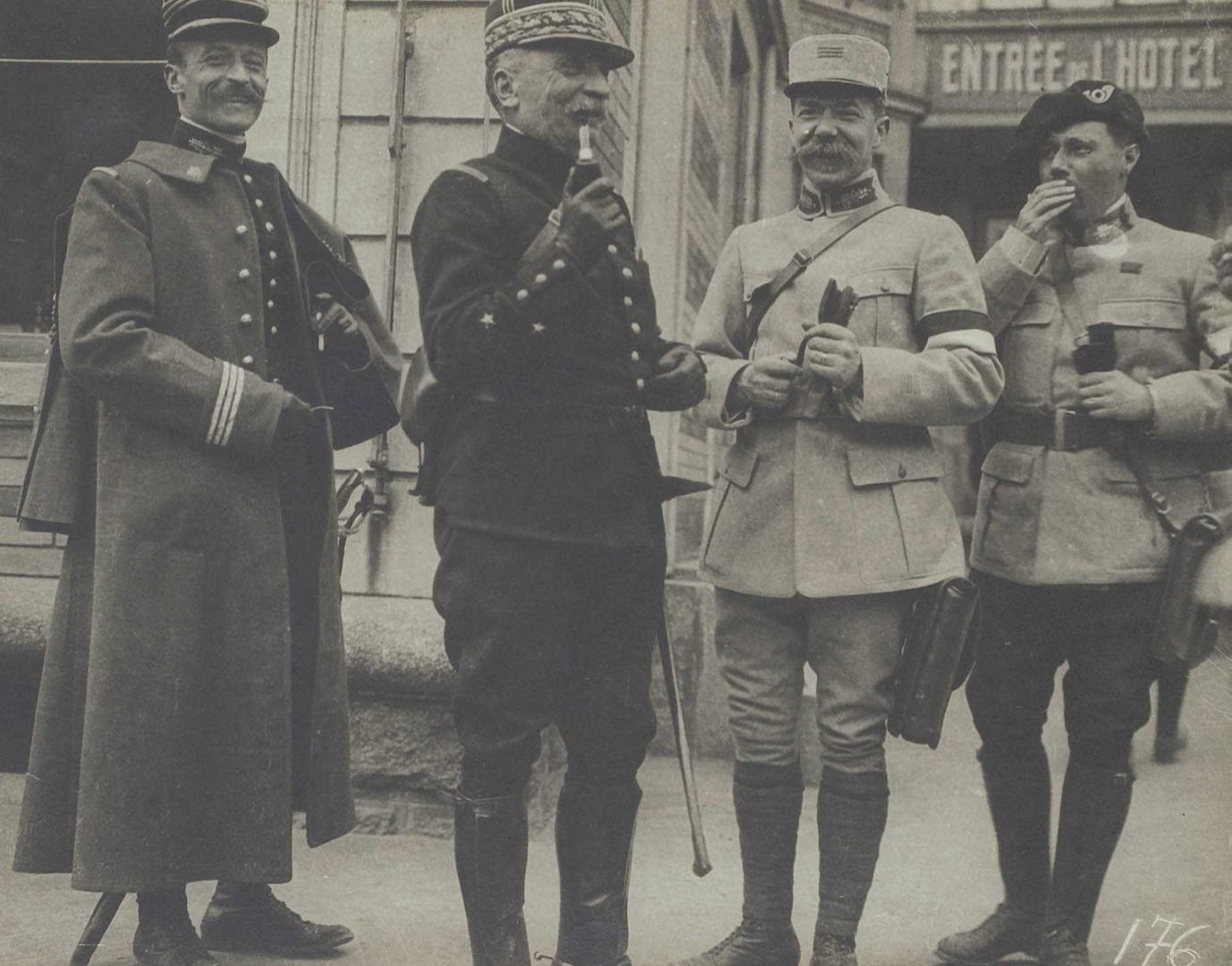
During the First World War, smoking was actively encouraged. Military leaders were smokers themselves and believed tobacco contributed directly to endurance and morale. They were frequently photographed smoking, setting an example for their men, whilst ensuring tobacco supplies to the army was considered a priority above civilian needs.
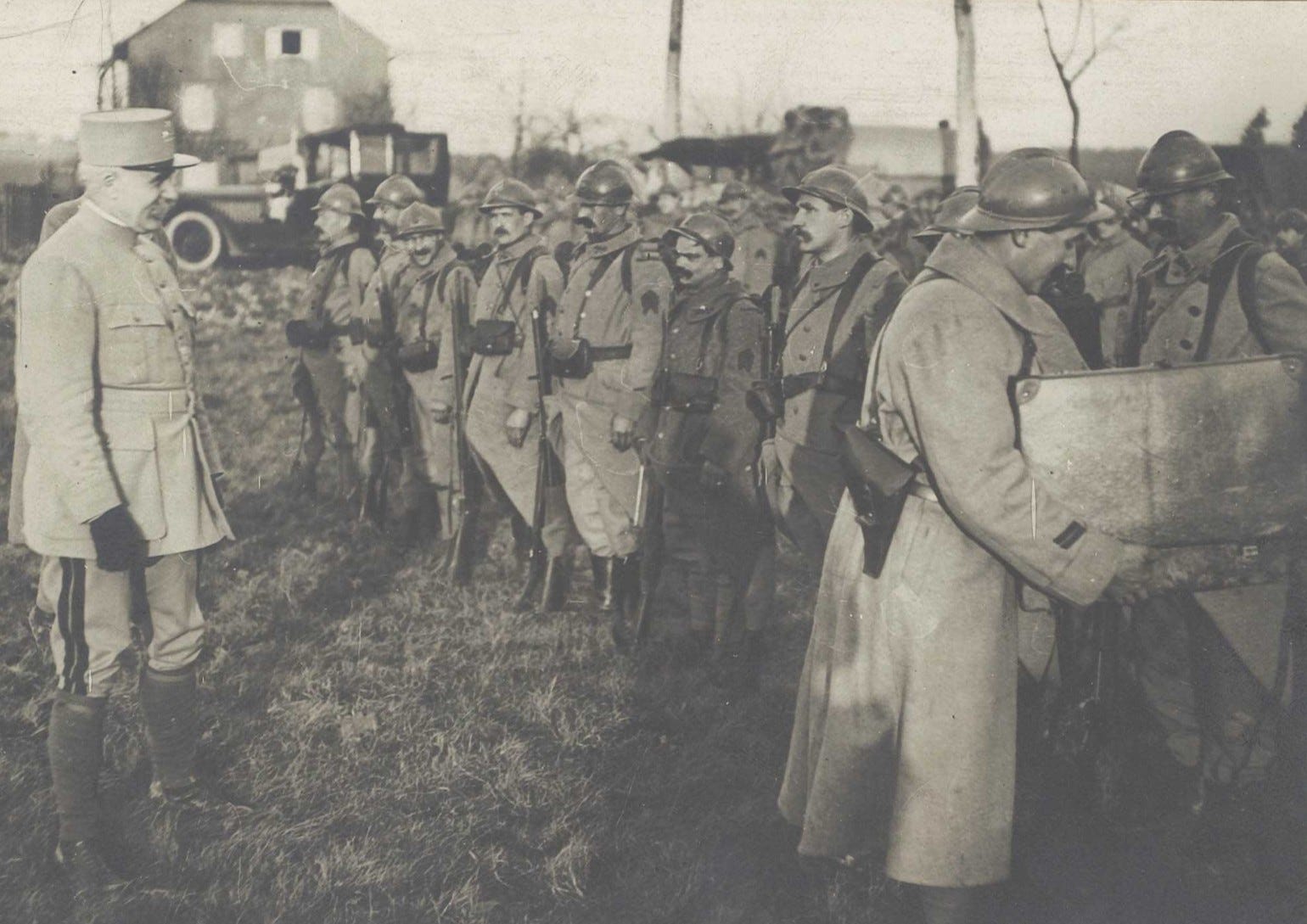
However as always with war there was a darker side to smoking, other than the damage we know it causes today. Men would often smoke to mask the smell of the trenches, which would stick in soldiers throats, and smoking was a way to mask that terrible smell and make life a little more bearable.
For the Poilu, however, tobacco was not seen as a vice, but a necessity, one of the few comforts available in a world of mud, fear, and waiting.