

On 23rd September 1915, Général Joseph Joffre sent a message to be read to the French troops preparing for the great offensive in Champagne and Artois.
It was meant to inspire.
“Soldiers of the Republic…..
…..Your élan will be irresistible. It will carry you forward in one initial effort right through the fortified lines which oppose you and up to the enemy positions. You will permit them to neither rest nor repose until victory has been won. Let us go forward wholeheartedly for the deliverance of the soil of our homeland and in order that justice and liberty may triumph.
Many of the soldiers who heard those words were far less certain.
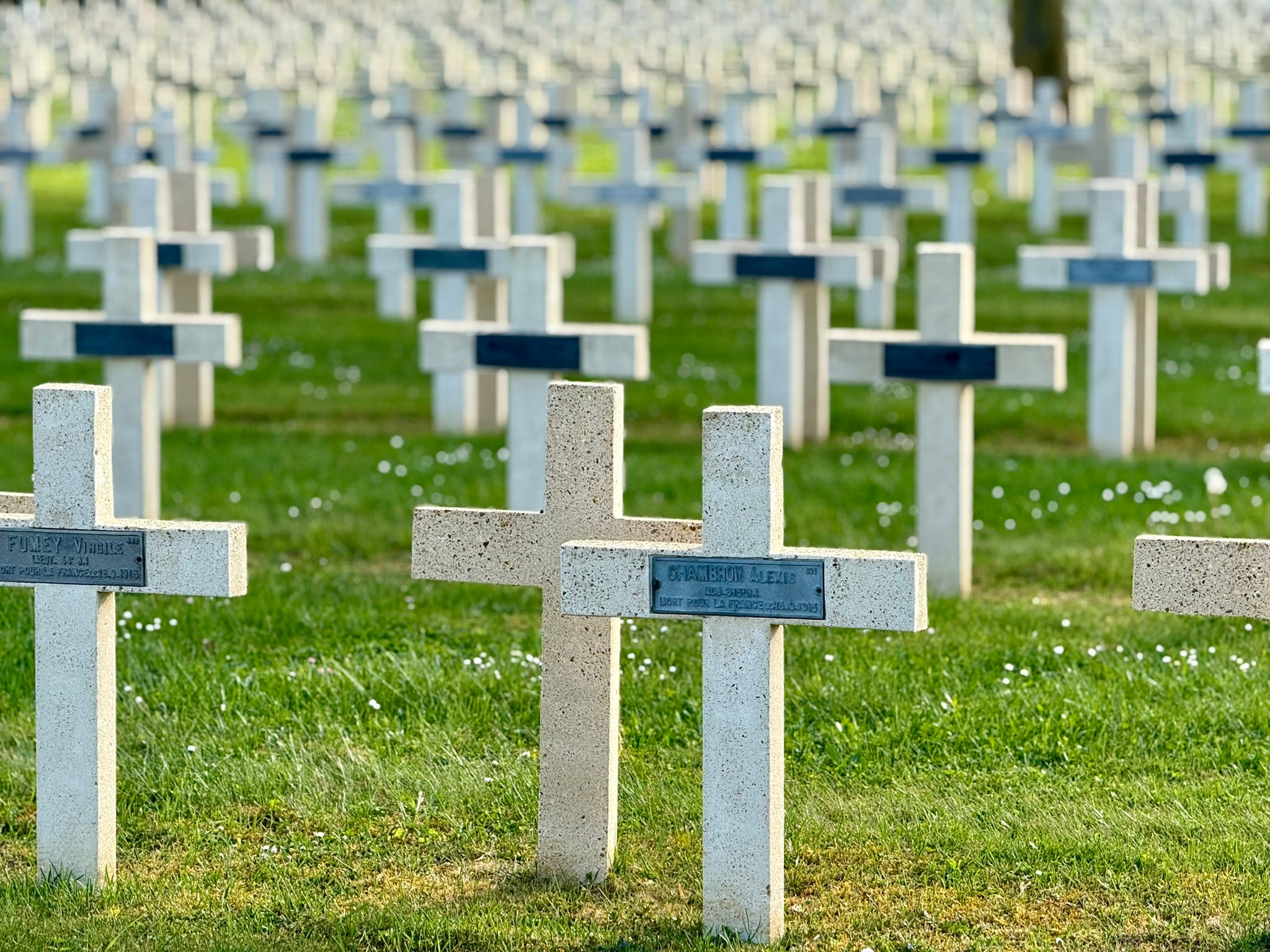
In Champagne on the far left of the main French offensive, near Aubérive, stood the men of the 315e Régiment d’Infanterie. On the night before the attack, Adjudant Alexis Chambron, of the 5e bataillon, 17e compagnie, wrote home to his wife and daughter.
His letter could not have been more different in tone from Joffre’s (extract below):
“In the meantime, whatever happens to me, you will be notified. So prepare yourself for this fateful moment, we knew that such a day would come. It may be that I get through this bad moment wounded and without too much difficulty. In any case, if something bad happens to me, please be courageous and prepare yourself for the worst...”
By the next morning, Chambron was dead.
A Carefully Prepared Offensive
The Champagne attack was meant to be a major breakthrough. Under Général de Castelnau, the Second Army of Général Philippe Pétain and the Fourth Army of Général Fernand de Langle de Cary were to attack across roughly 35 kilometres, from Aubérive to Ville-sur-Tourbe
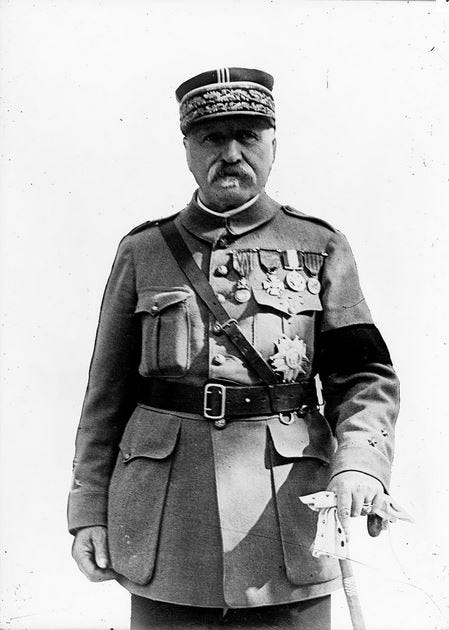
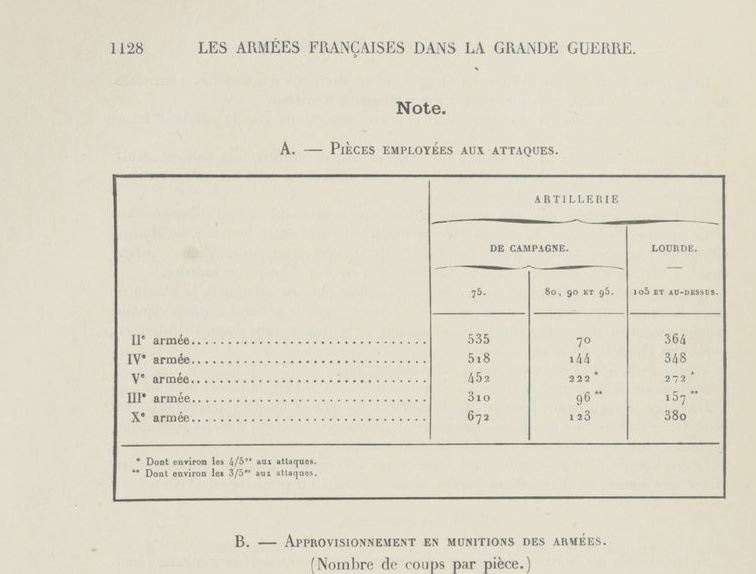
The operation had already been postponed several times, due to Pétain insisting (probably wrongly, which would have major impact on the battle, de Cary and de Castelnau would have preferred to go on the 15th September, even if it was going to be tight) on a more thorough artillery preparation and his troops not being ready (no proof the extra days helped or hindered). Despite Pétain complaints, by the 23rd September in Champagne, the French had assembled one of their largest artillery groupings of the war: 926 heavy guns and 1,053 75 mm field guns.
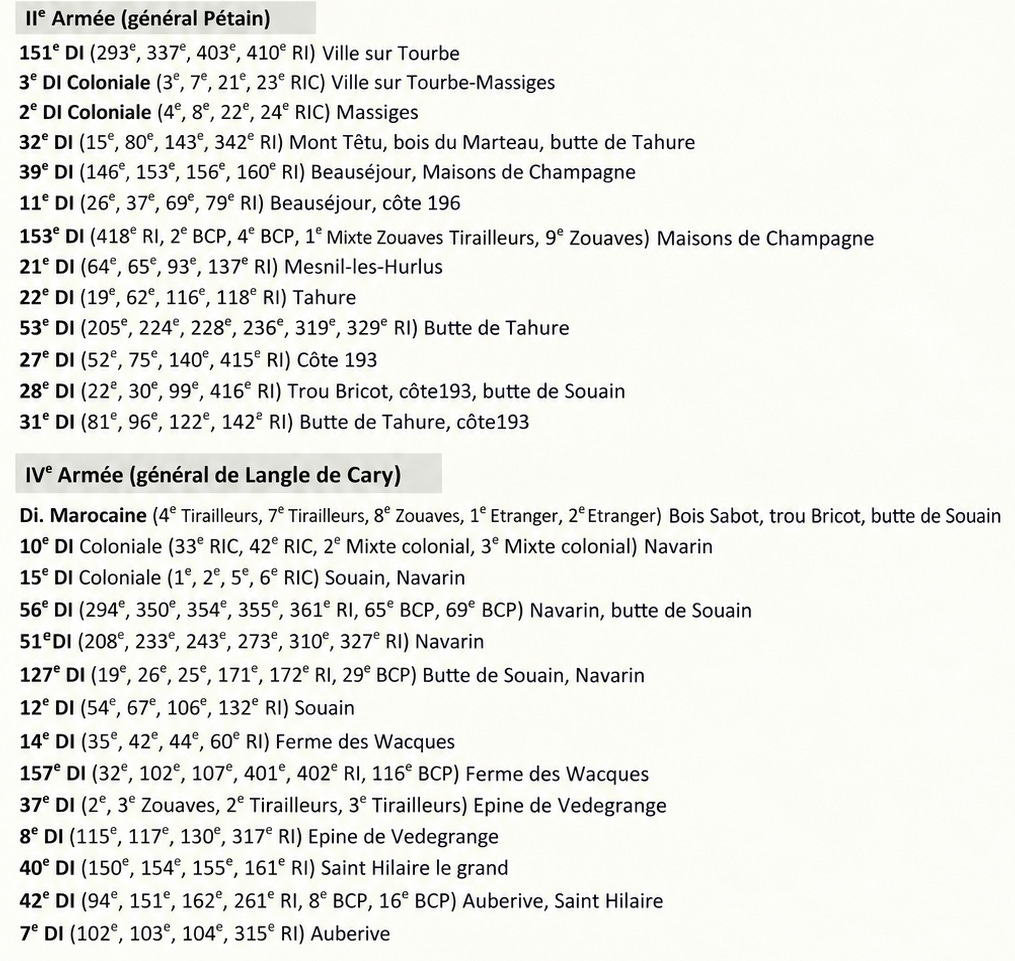
In total, around 200,000 men from 27 divisions would go over the top at 09:15, their watches synchronized to Eiffel Tower time*.
*Eiffel Tower time, not a military expression, but a standard introduced in 1910, when the Eiffel Tower began broadcasting a radio time signal as part of the International Time Service. This method allowed the French to coordinate precisely without transmitting any signals that might alert the enemy to an imminent attack.
Yet warning signs were already present. Rumours about the offensive were circulating in Paris. The weather had turned bad. Aerial reconnaissance was disrupted. Shell shortages and defective ammunition remained serious problems. French politicians started to get jumpy… when French President Raymond Poincaré visited headquarters, he asked what the government should expect in terms of casualties and whether the army was ready. He was told to anticipate 150,000 casualties, but reassured that morale was high. Général de Langle de Cary expressed confidence, while Général Pétain was more cautious, insisting that he still required additional shells.
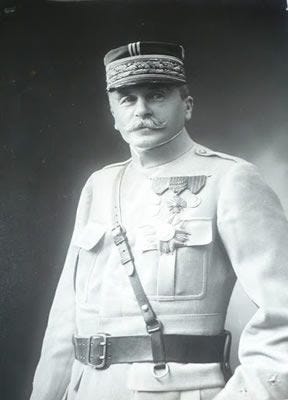
As for Général de Castelnau, the President received a dry, almost ironic reply from a man sidelined by the political elite due to his religious convictions and aristocratic background:
“only thing left, is to pray to god that it works”
Praying would not solve one crucially part, the German barbed wire in the 2nd lines were still intact…
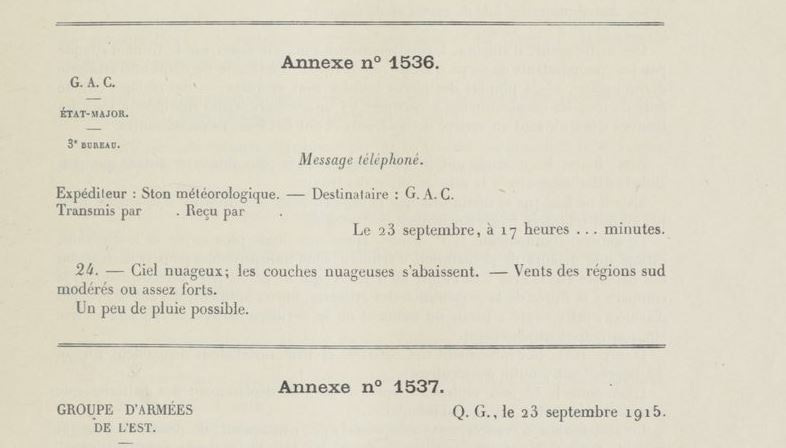
The men of the 315e RI would soon discover just how badly intact.
315e RI Attack at Aubérive
At 09:15, under heavy skies with rain in the air, the 315e RI advanced equipped with 250 rounds of ammunition, light field pack, gas mask and for the first time on the Western Front a steel helmet, the M15 Adrian. Their first wave including the 17e compagnie with Alexis Chambron, that had to cross roughly 200 metres of no man’s land.
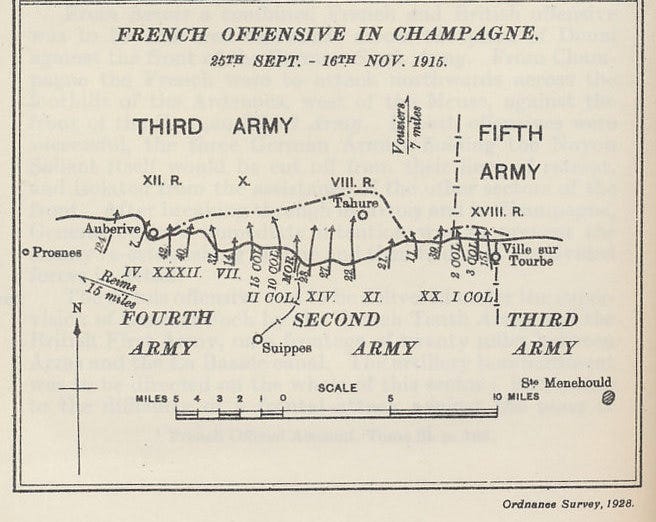
At first, there was some success. On the centre and right, French troops captured the German first line and pushed toward the second. But by 09:30 they were stopped by a deep belt of uncut barbed wire.
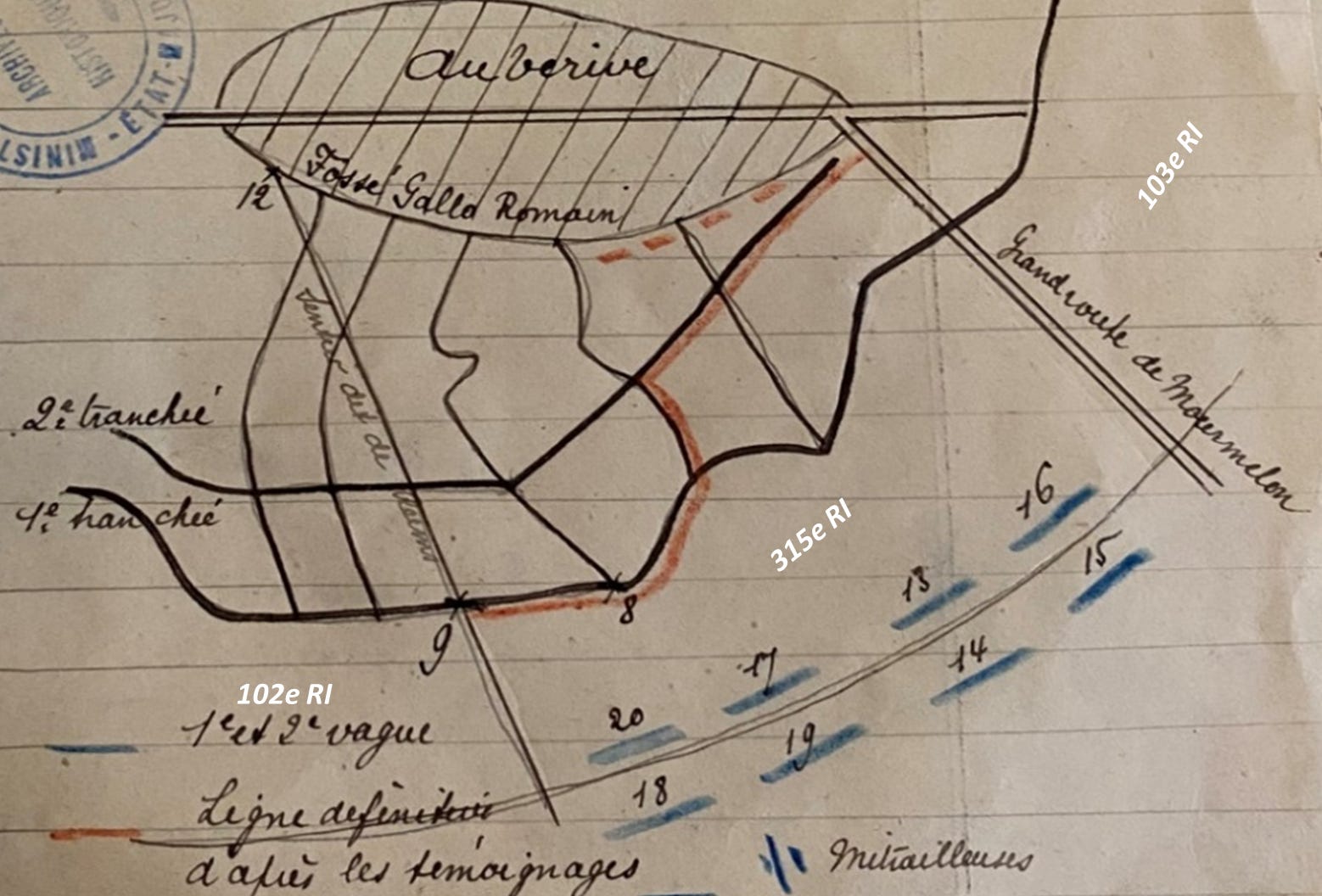
On the left, the 20e compagnie struggled even to reach the first objective. The second wave (18e, 19e, 14e, 15e), which included Colonel Devaux (regiment commander) and the battalion commanders, soon caught up with the first just as momentum was faltering.
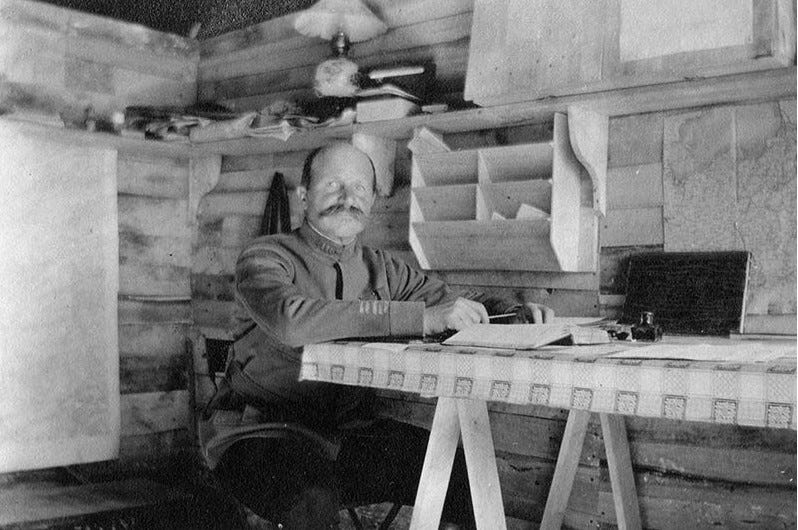
Then the German counterattack came.
Men emerged from covered positions and underground shelters, attacking with grenades and machine-gun fire from both flanks. The 315e RI JMO (regimental diary) later described the scene in brutal terms:
“Our ranks were cut down near the barbed wire, which was now decorated with human remains.”
The regiment’s companies of the right flank, the 17e, and also the 13e and 16e became isolated, surrounded, and trapped near the German second line. Other companies on the left (that had moved over over to the centre to make progress after initially being stuck) and in the second wave would also be caught in the same killing ground.
The fighting was violent and to the death, which is why there are few accounts of the battle. However, one rare eyewitness account from a soldier of the 5e battalion described the violence of the death of Sous-Lieutenant Henri Régnard:
“I was shooting alongside the Sous Lieutenant who fired his Browning revolver and gave orders to around fifteen men who were with me in the trench - it would be difficult and even impossible for me to give information on these men who were from 4e battalion as I was from the 5e. It was about a quarter of an hour into the shooting when I was suddenly shaken by a violent detonation felt to my left. I turned around suddenly and saw Sous Lieutenant Régnard lying full length on his back... his chest was pierced by the full load of a grenade.”
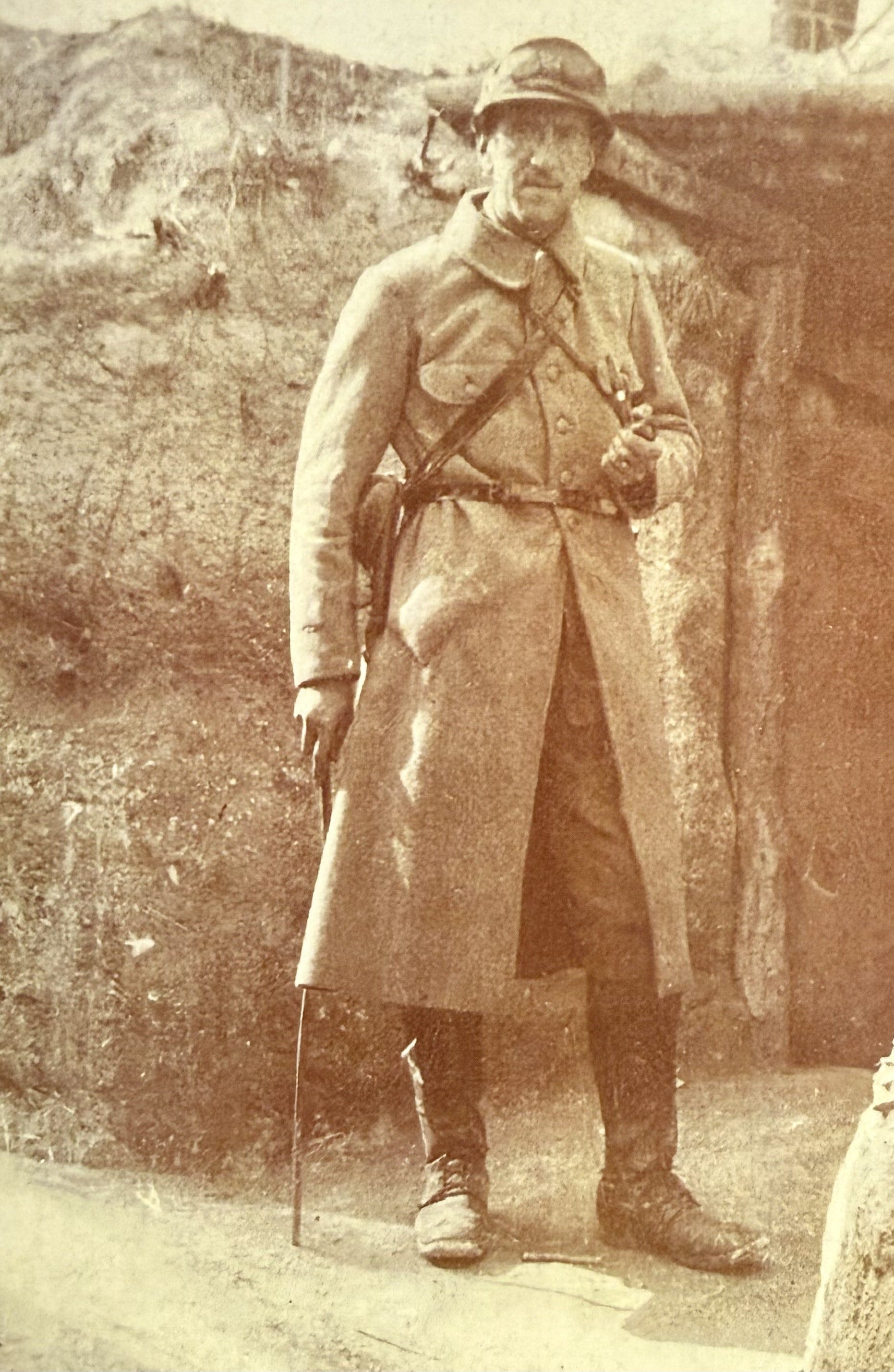
Why It Failed
The failure cannot be explained by “élan” or lack of it alone. The assault at Aubérive and along the line broke down because several problems converged at once:
Uncut barbed wire
Insufficient and defective shells
Bad weather, which grounded reconnaissance aircraft (would not had been a factor if Petain had not forced Joffre hand to move the date)
Poor communication, once troops advanced
Confused reinforcement plans
German counterattacks from prepared positions
As the morning wore on, the 315e’s losses became catastrophic. Reserve companies sent forward later in the day were also pinned down and forced back. This included LTN Tollard who was sent into action 13h15 with the 21e and 24e compagnies:
““On the 25 September at about 13h15, my orders were to attack the point 9 (see above) where the Germans were still holding and to encourage on the way the 102e soldiers, who were lying on the grass in front of the enemy trenches. I came out of the trench with my two sections, and we ran up to the first lines of barbed wire, which were intact, creating an impassable barrier. At this time the losses were already high, my first squad had already lost 8 men out of 10 and we had to lie down in order not to be all killed. I was then slightly on the right of the point 9, as my 2nd section had veered too much to the right and I had to run to try to pull them back into place. I stayed there for about two and half hours, waiting for reinforcement or rather our artillery to open fire on the trenches and barbed wire. It is during that time that I saw quite far on my left at the location captured by the 102e, some men who were running and raising their arms up, without equipment, towards the enemy trench. A German officer was actually inviting them to come in. I fired a few pistol shots to try to stop the flow, but without success”
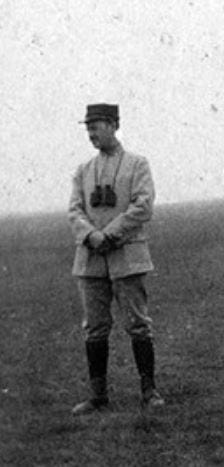
By 15:00, the battle had effectively run its course. Now it was time for the 315e RI ‘service de santé’ medical teams and stretcher bearer to get to work venturing into no man’s land. One of these men was Medic Clement Simon whose teams went above and beyond their duty, when his first aid post was hit on the night of 25th September, but still managed to evacuate all the men, which was described by François Cordey:
“at night, we went to work in the first aid post in the 2nd line, German artillery was bringing down a hail of shells. One of those shells fell on the roof of the shelter whilst I was dressing a soldier. The roof collapsed on us, but by a miracle nobody was hurt. I got a whack from a wooden pillar and that is all. Straight away we then evacuated this dangerous shelter.”
One French soldier later summarised the attack in bitter terms:
“It ended up being a slaughter.”
Whilst there were also great stories of heroism and survival, the wounded had a profound impact on the men treating them, François Cordey:
“Never have I seen such a concentration of suffering. What a dreadful sight the stream of wounded we brought in, and what wounds.”
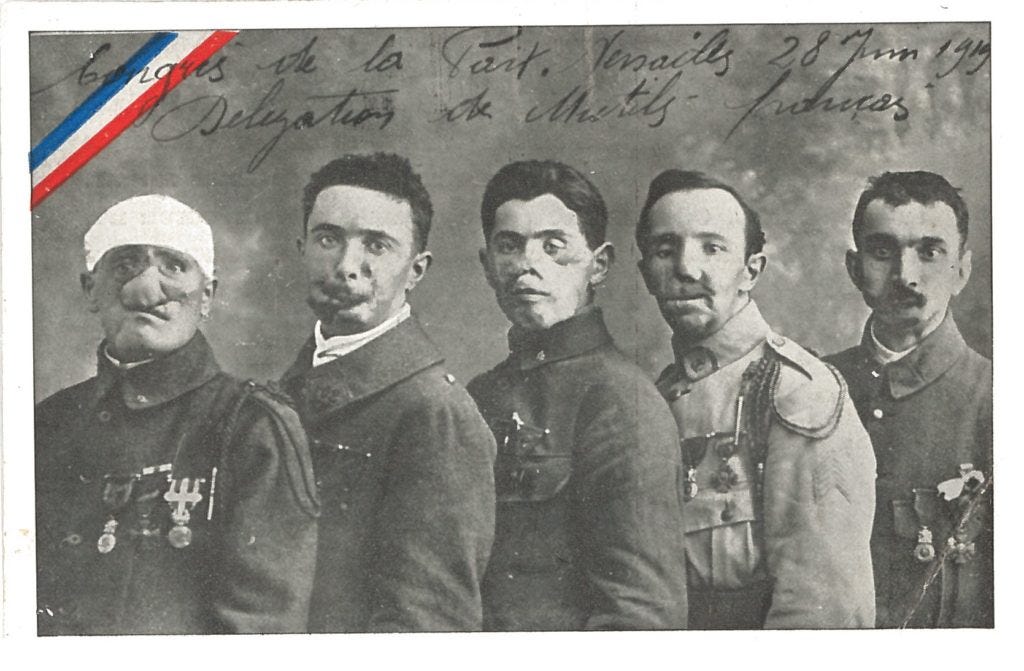
One of these men is a story in itself that has never been told before. This is Soldat Eugene Joseph Hébert, who on the 25th September was part of the 315e RI first wave on the right flank that progressed well towards Auberive, where he was then seriously wounded by a piece of shrapnel to the face, that meant it was a miracle that he even survived, let alone make it back to French lines. The wounds he suffered were life threatening and would disfigure him for life. He later was awarded the Croix de Guerre avec palme and the Médaille Militaire. By June 1919 he was front page news, as he was part of the five “Gueules Cassées” (broken faces) that sat in front of the German delegation as they signed the Treaty of Versailles.
The Cost to the 315e RI
That evening, the regiment began counting its losses. The scale of the disaster was immediately clear.
By 27th September, the 315e RI had only 1,050 fit men left, down from 2,666 just three days earlier. Total casualties for 25th September 1915 came to approximately 1,616 men.
Entire companies had effectively been destroyed. Officer losses were especially severe. On the right flank alone, the 4e battalion lost 9 of its 11 officers killed.
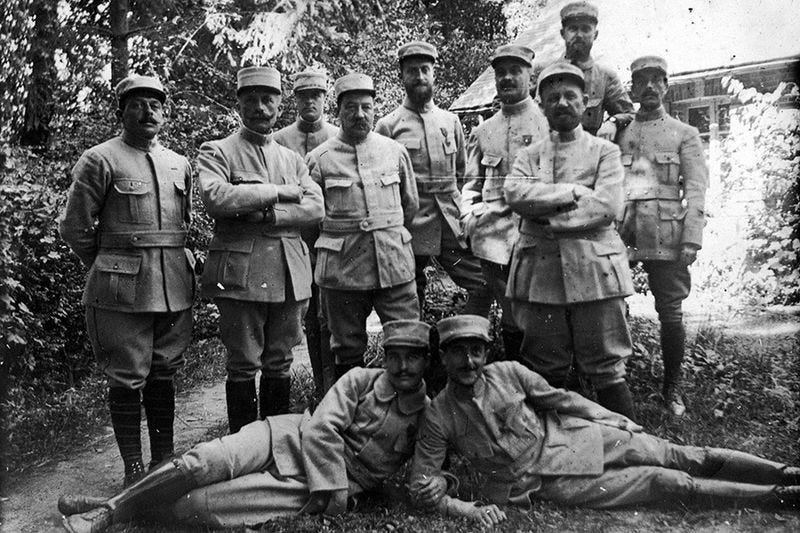
One Day, One Regiments Story
Across the wider Champagne and Artois offensives, 25th September 1915 became one of the bloodiest days in French military history (estimated 21,500-23,000 killed).
For the 315e RI, that wider catastrophe can be seen in human scale as Medic François Cordey later wrote:
“Despite these losses, it was a glorious day for us (315e RI), as I never thought our soldiers were capable of such heroism. What an example, what respect we owe them.”
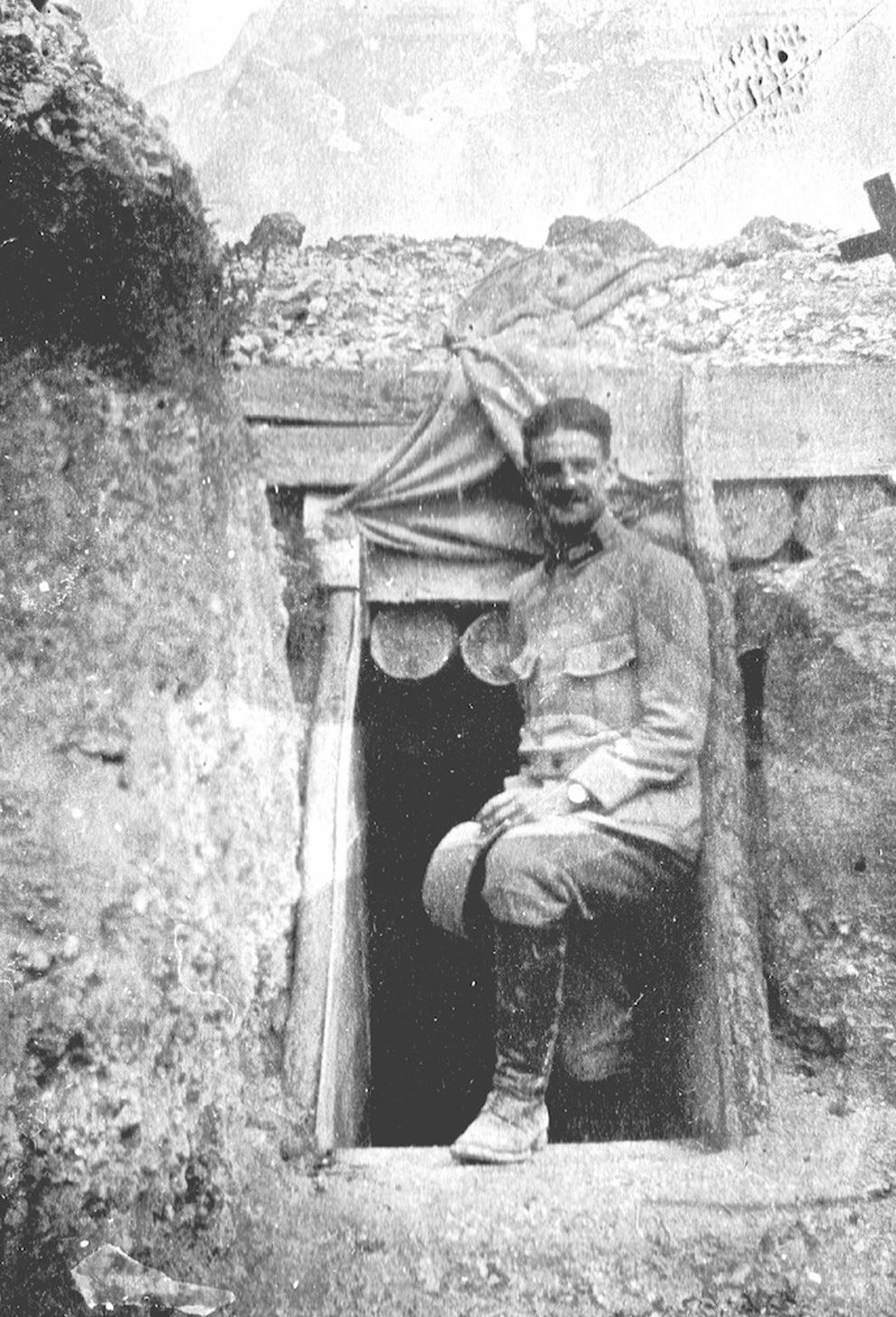
Putting the 315e’s losses into perspective
Further analysis of the death records places the catastrophe suffered by the 315e Régiment d’Infanterie on 25th September 1915 in a wider context. The current death records are 516 recorded deaths for the regiment on that date, placing it fourth among the regiments:
Regiment Recorded deaths, 25 September 1915
3e Régiment d’Infanterie Coloniale -599
23e Régiment d’Infanterie Coloniale - 596
35e Régiment d’Infanterie - 518
315e Régiment d’Infanterie - 516
These figures count recorded deaths, rather than all casualties. The approximately 1,616 losses discussed above encompass a much broader human toll on the regiment. The destruction extended deep into the regiment’s everyday leadership. Among its recorded dead were 55 corporals, 40 sergeants and seven adjudants the men responsible for leading the men and keeping soldiers together under fire.
For the 315e RI, the comparison within its own 7e Division is stark, of the 913 deaths linked to the 7e Division, around 55% belong to the 315e RI alone. This showcases that the disaster at Aubérive was exceptionally concentrated within one regiment, the 315e RI.
Now looking at couple of steps up at the Army Group level, matching the regimental death records to the order of battle produces the following picture:
Army Level Recorded deaths
Second Army — Général Pétain 6,978
Fourth Army — Général de Langle de Cary 7,045
The difference is only 67 deaths, but these figures are estimates (likely 2,000 missing names or not classified correctly), but cannot establish that either army suffered definitively greater losses. They instead show the enormous cost borne by both wings of the Champagne offensive, but also puts into question did Petain delay actually help? Would casualties have been lower or higher?
When we drill down we can find some interesting stats within Petain Second Army, the 3e Division d’Infanterie Coloniale stands out: its four infantry regiments the 3e, 7e, 21e and 23e RIC account for 1,968 recorded deaths, the highest divisional grouping. These losses were concentrated on far right flank at Ville-sur-Tourbe and Massiges.
Fourth Army’s losses were spread across several severely affected divisions, including the 14e, 37e, 42e and the 315e’s own 7e Division. Also there is no concentration in one location, it is across multiple locations: Navarin, Souain, Fermes des Wacques, Vedegrange, Auberive.
The ages behind the losses
The men lost by the 315e RI on 25 September 1915 were, on average, older than those lost across the wider attacking armies. Their mean age was 31.6 years, calculated from the 502 entries with usable full birth dates among the regiment’s 504 recorded deaths.
Formation Average age at death (Number of usable birth dates)
315e RI 31.6 years (502)
7e Division, including the 315e 29.7 years (908)
Other three regiments of the 7e Division 27.3 years (406)
Second Army — 26.7 years (6,900)
Fourth Army — 27.1 years (6,486)
The difference is particularly revealing within the 7e Division. The dead of the 315e were, on average, more than four years older than those of the 102e, 103e and 104e RI combined. The regiment’s exceptionally heavy losses therefore also shaped the age profile of the division’s dead.
Individual names give these averages a human scale. The youngest recorded member of the 315e was Albert Levy, a soldat de 2e classe, born on 26 February 1899. His recorded birth date makes him 16 years old when he died at Aubérive.
At the other end of the rank and file was Jean Marie Chevalier, also a soldat de 2e classe. Born on 15 January 1873, he was 42, the oldest ordinary soldier identified. The oldest officer and oldest recorded man in the regiment with a complete birth date was Fernand Albert Henry, chef de bataillon, born on 2 March 1867, he was 48 when he died.
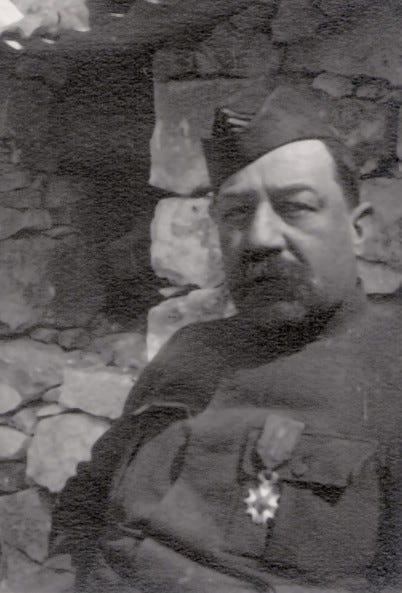
These comparisons give the story of 315e RI a clearer scale. The 315e RI suffered one of the heaviest regimental death tolls identified on the day that Joffre promised a “hurricane of fire.” The Hurricane blow itself out …. costing the lives of thousands.
Watch the video version
I’ve also turned this story into a film using original letters, photographs, maps, and regimental records, link below:
France’s Deadliest Day (1915) | The Story of One Regiment

Thank you.
This was a terrible day.
Early in the war French regiments were regionally raised, and the impact of the casualties on small communities would have been dreadful. Even more so as the men who lost their lives were reservists in their early thirties, and would likely have been married with children.
If politicians today had a better understanding of these things, they would not talk so easily and readily of preparing for another war.
Fascinating information. Thank you for putting so much effort into the research. 25th September 1915 is better known in a Scotland for the terrible losses at Loos. A black day for the Allies and still a long way until the end of the war.