

Today marks exactly 110 years since my great-grandfather, Sergent Jules André Destrigneville, earned the citation at Verdun that would lead to his Croix de Guerre .
Earlier this year, I took his medal back to the place where he earned it.
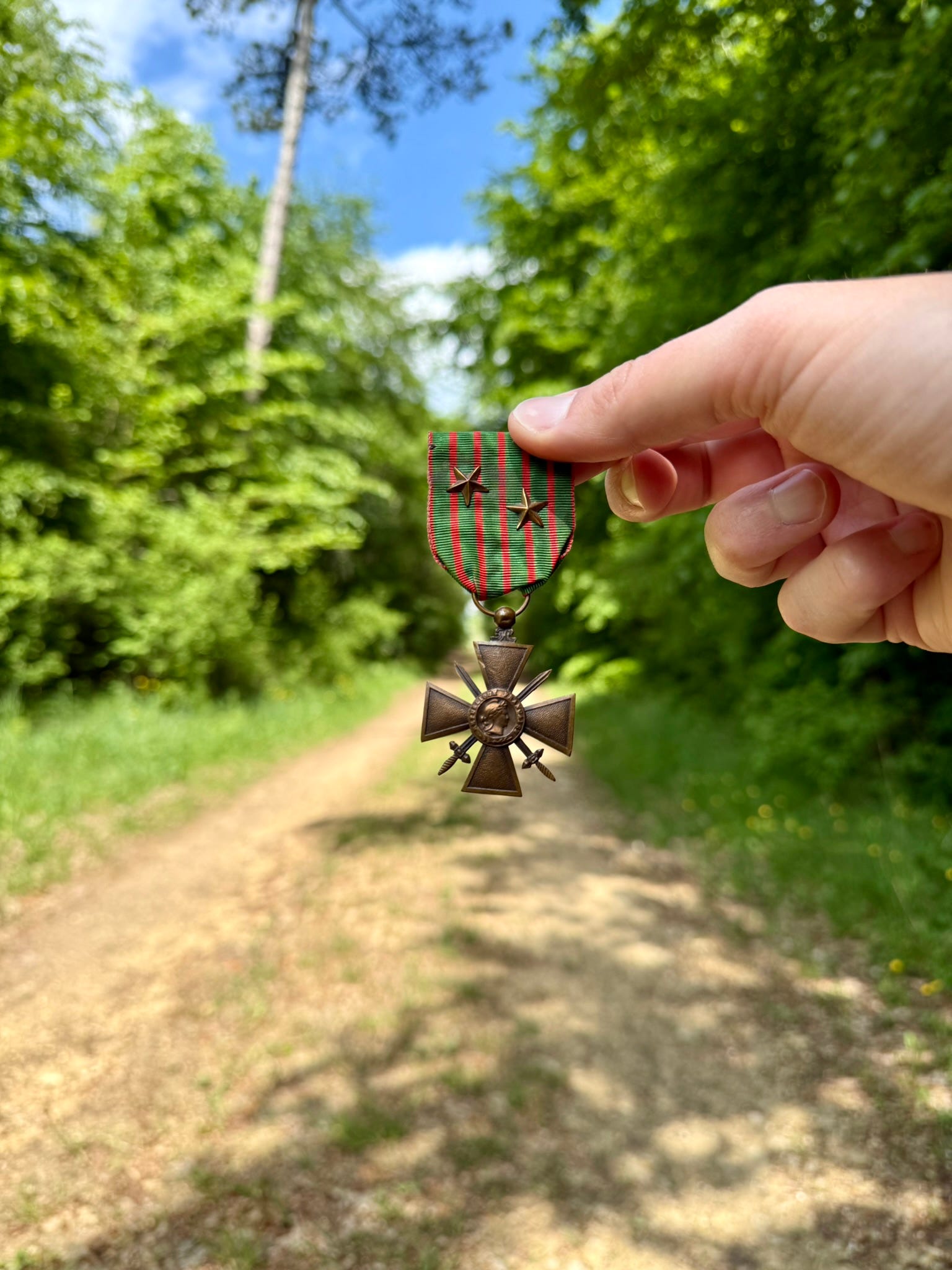
Today it is difficult to imagine what happened here.
The battlefield and much of the ravin has disappeared beneath woodland. A quiet track runs through the trees. Apart from the uneven ground and occasional remnants of war, there is little indication that on 3rd September 1916 this was part of one of the most violent battlefields on earth.
But 110 years ago, Jules was here and he had only just arrived back from leave, as he mentioned
“it’s not a bad place to get back into the swing of things”
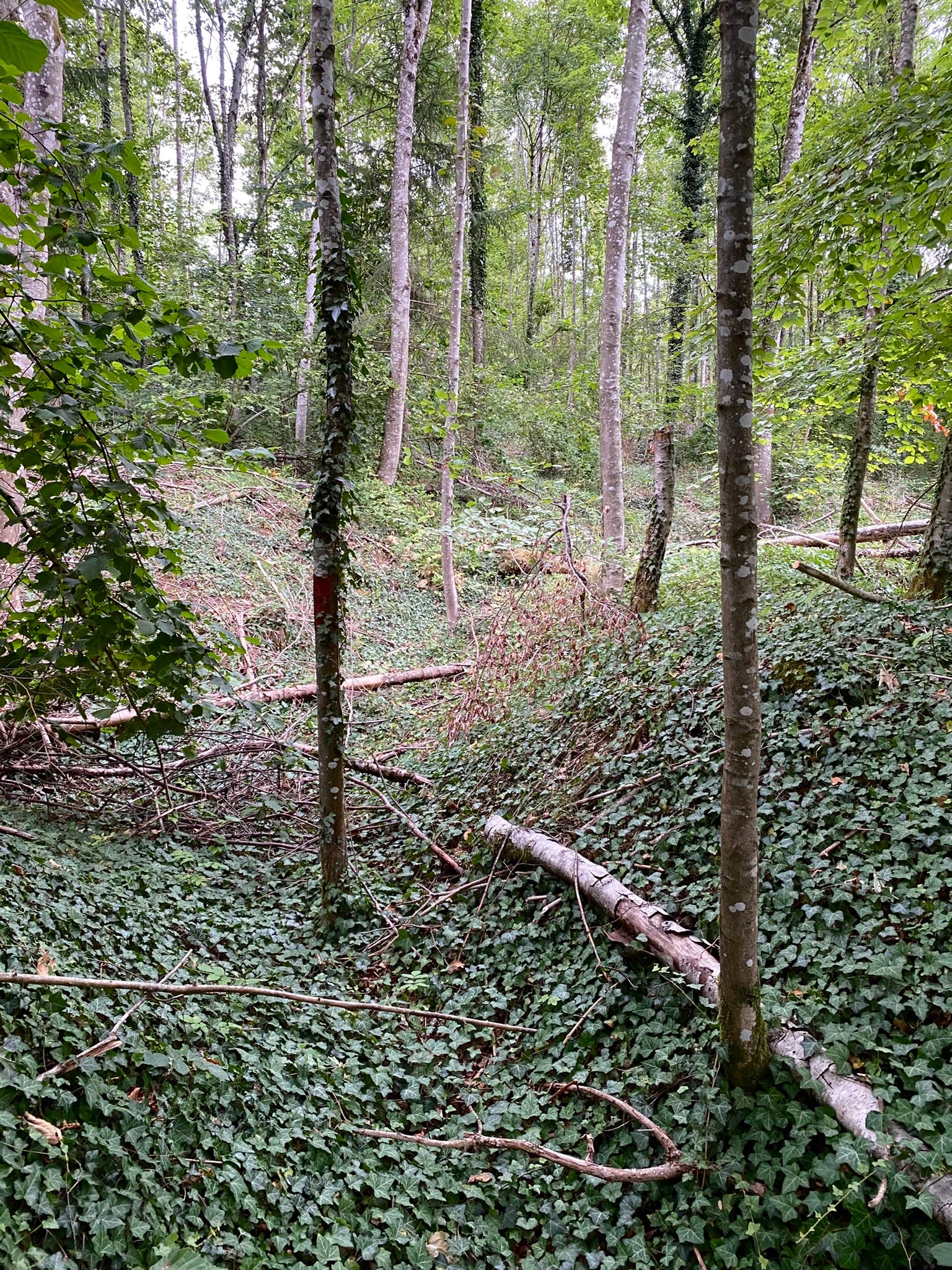
Jules was a sergeant in the 14e Compagnie, 4e Bataillon of the 315e Régiment d’Infanterie. His regiment had arrived at Verdun on 30th August, travelling along the Voie Sacrée before entering Verdun Citadelle, a city within a city. From there, the men moved onto the battlefield around Froideterre and the Thiaumont plateau at the Boyau Lagadec (remains pictured below)
Jules, however, was late arriving.
He was returning from leave and struggling with the railway system as he attempted to catch up with his regiment. On 1 September, still around 150 kilometres from Verdun, he sent a postcard home:
“We are going to V, it’s not a bad place to get back into the swing of things.”
3rd September 1916
By 3rd September, Jules had just rejoined his company. That afternoon, the 102e Régiment d’Infanterie attacked German positions around Thiaumont. The attack began at 14:00, stalled after suffering heavy casualties, and was renewed later that afternoon
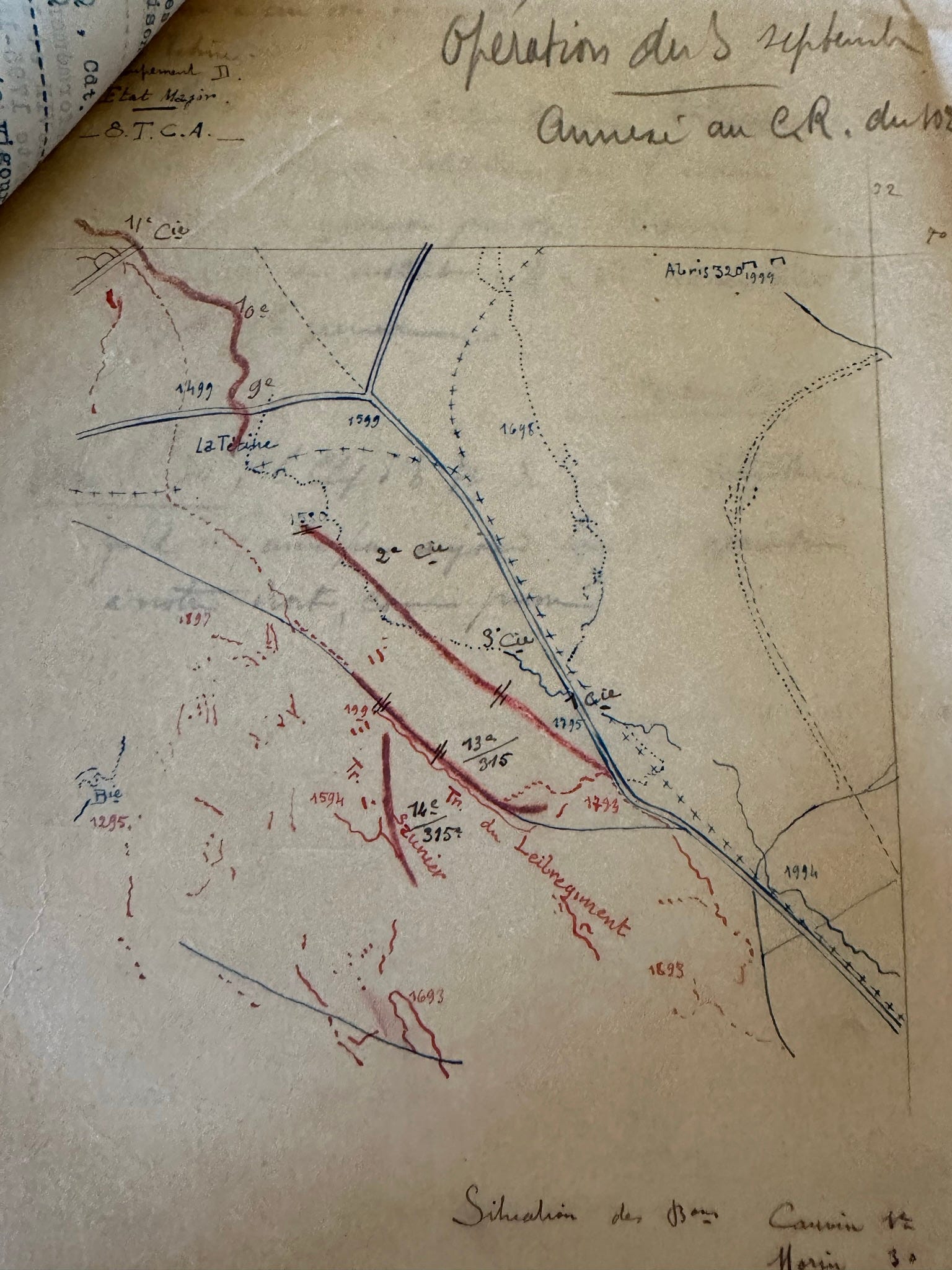
At around 16:00, orders reached Jules and the men of the 14e Compagnie. They were to move forward and support the 102e RI. Jules wrote a few lines:
Just a couple of words. I am still in good health and the return went well. We have not got too much to do, but unfortunately we have some awful weather since yesterday lunchtime. I have not had any news from you
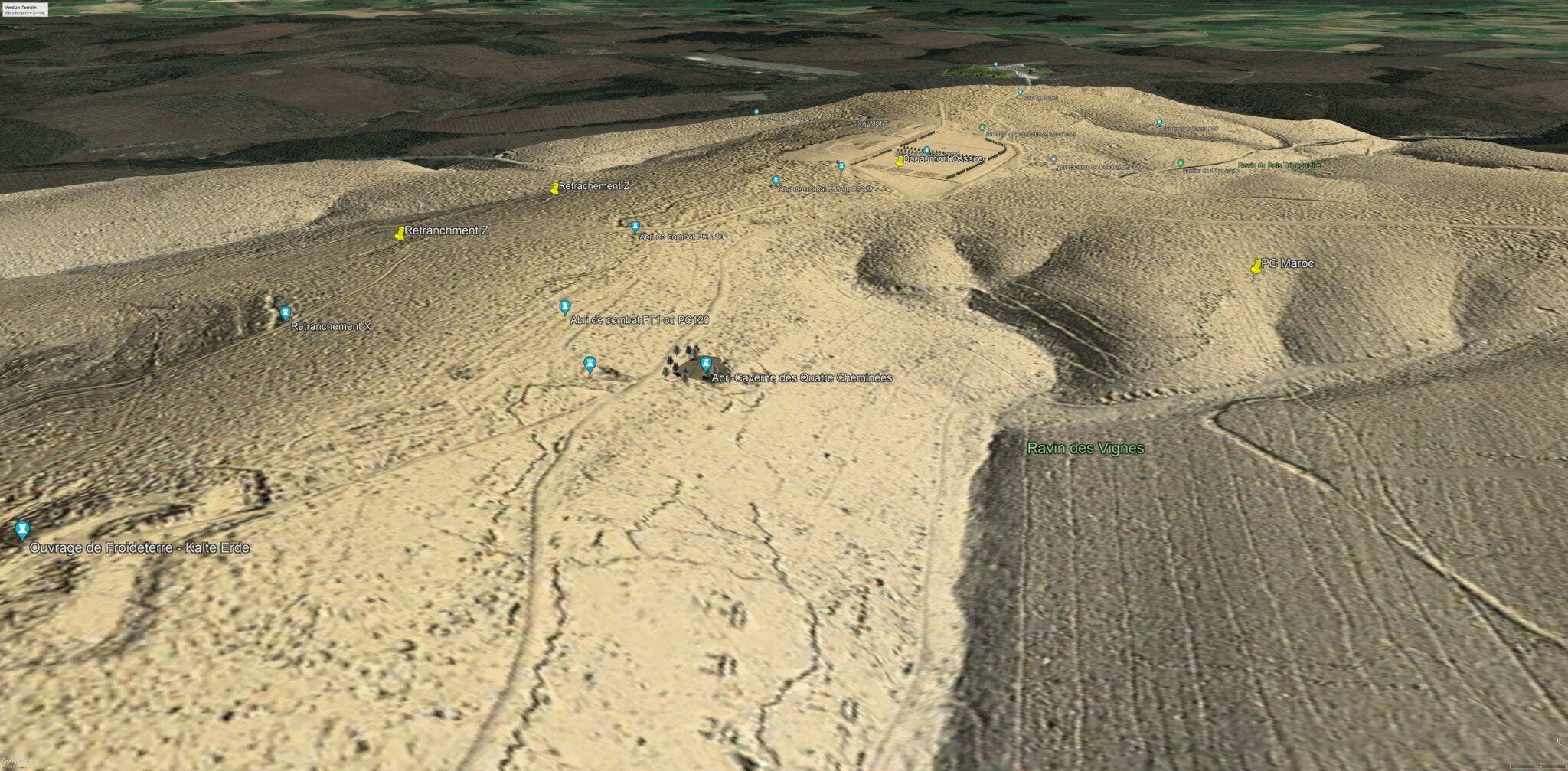
Getting to there new location meant crossing the Ravin des Vignes. The soldiers had another name for it: Le Ravin de la Mort/ the Ravine of Death (Lidar image of the Ravin today)
One of Jules’ comrades, Hervé Lambert, later described what happened:
“The following day at 2pm in the afternoon ( 3rd September) the 102e attacked. The bombardment had not stopped since the 31st August, and at 4pm we received orders to support the 102e. We had, at all costs to cross le “Ravin de la Mort”. The artillery barrage that the boches had started two days ago did not want to slow down, so off we went up the slope with courage and there we ran as best as we could, men were falling here and there, wounded, killed, but we were still running, we were nearly breathless; but our hearts sank, when we eventually arrived on the hill and saw our new position were several shell holes, but at least we were safe”
Eventually they reached their position. There were no real trenches waiting for them. It is clear from Hervé ‘s account that Jules had come back just in time to face the harsh reality of Verdun. As Jules predicted on 1st September, it would not be a bad place to get back into the swing of things. Such a prediction turned out to be correct as he earned his first regimental citation during the action of the evening of the 3rd September, for which he was awarded la Croix de Guerre on the 24th September:
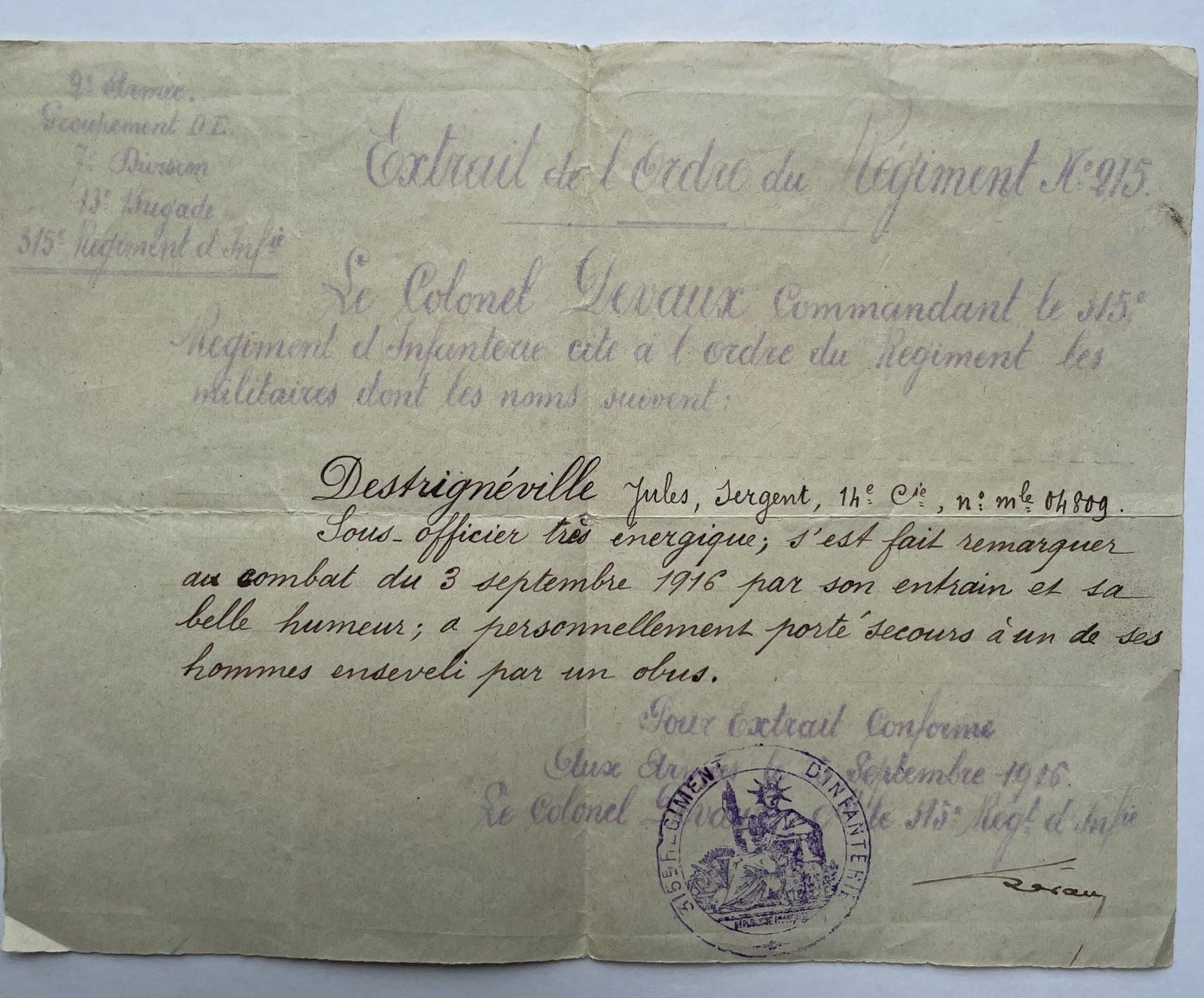
“Destrigneville Jules Sergent,14e compagnie, matricule 4809. S-officier very energetic, whose actions were noted for his drive and positive attitude during combat of the 3rd Sept 1916, who personally rescued one of his men that had been buried alive by a shell”.
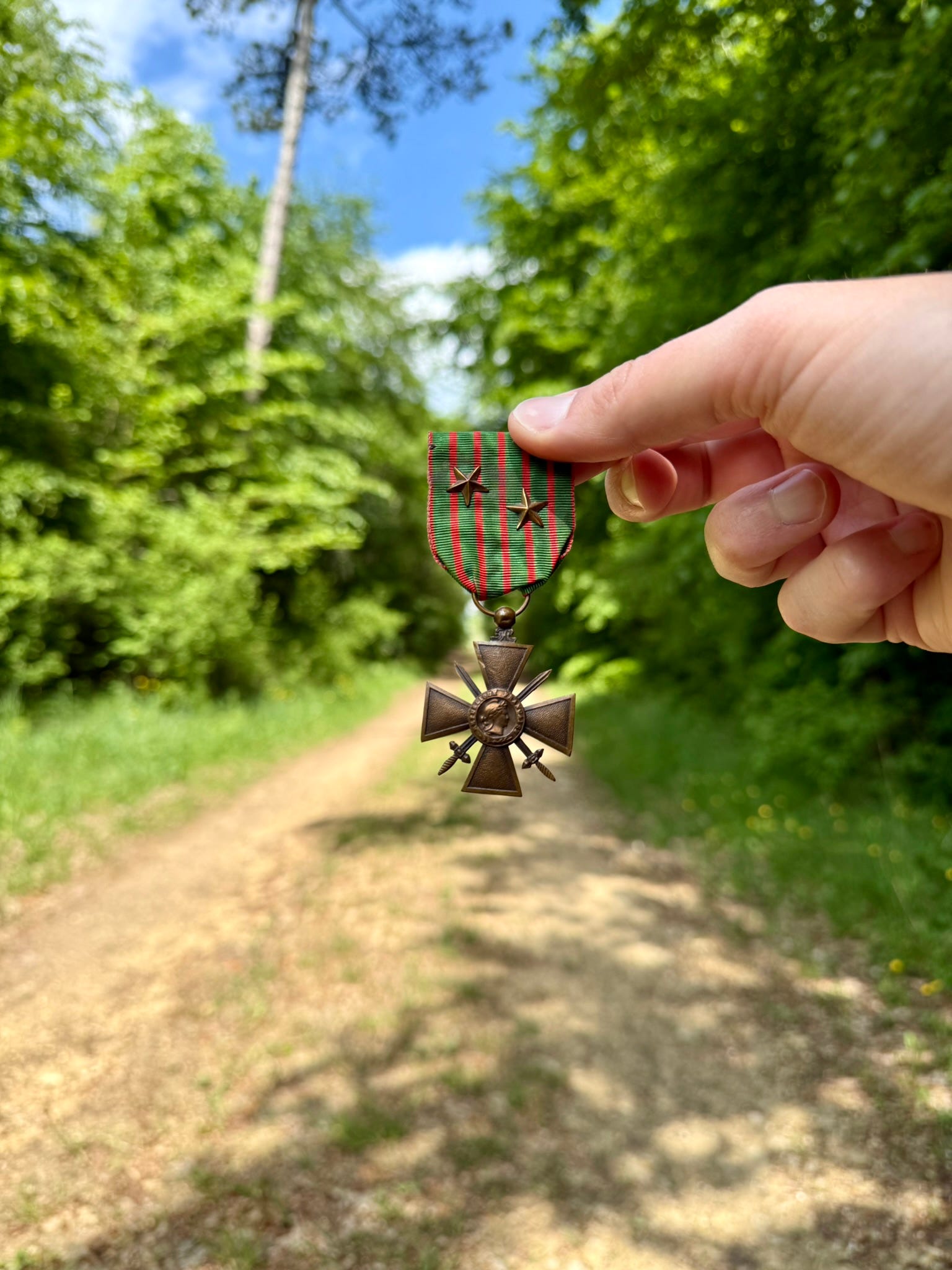
On 24 September 1916, Jules was awarded the Croix de Guerre for his actions.
It is the medal in the photograph
What is all the more powerful is what he would write the next day
“I don’t know if we are here for long, I don’t think so, but I will have much to tell you later. I have not written to your cousin, please convey my apology, but I have no paper to write with, I lost my bag and half my belongings. The hardest thing is that I don’t have any more tobacco left”
There is no mention of heroism.
No description of rescuing the buried soldier.
No suggestion that he had done anything extraordinary.
His ordeal at Verdun was only beginning.
Over the following days he would endure almost continuous bombardment, hunger, inhumane conditions and the lose of much of his company.
By 8th September he wrote:
“Here very soon, there will not be anybody left in the compagnie. I have never seen anything as horrific as here.”
And yet he survived.
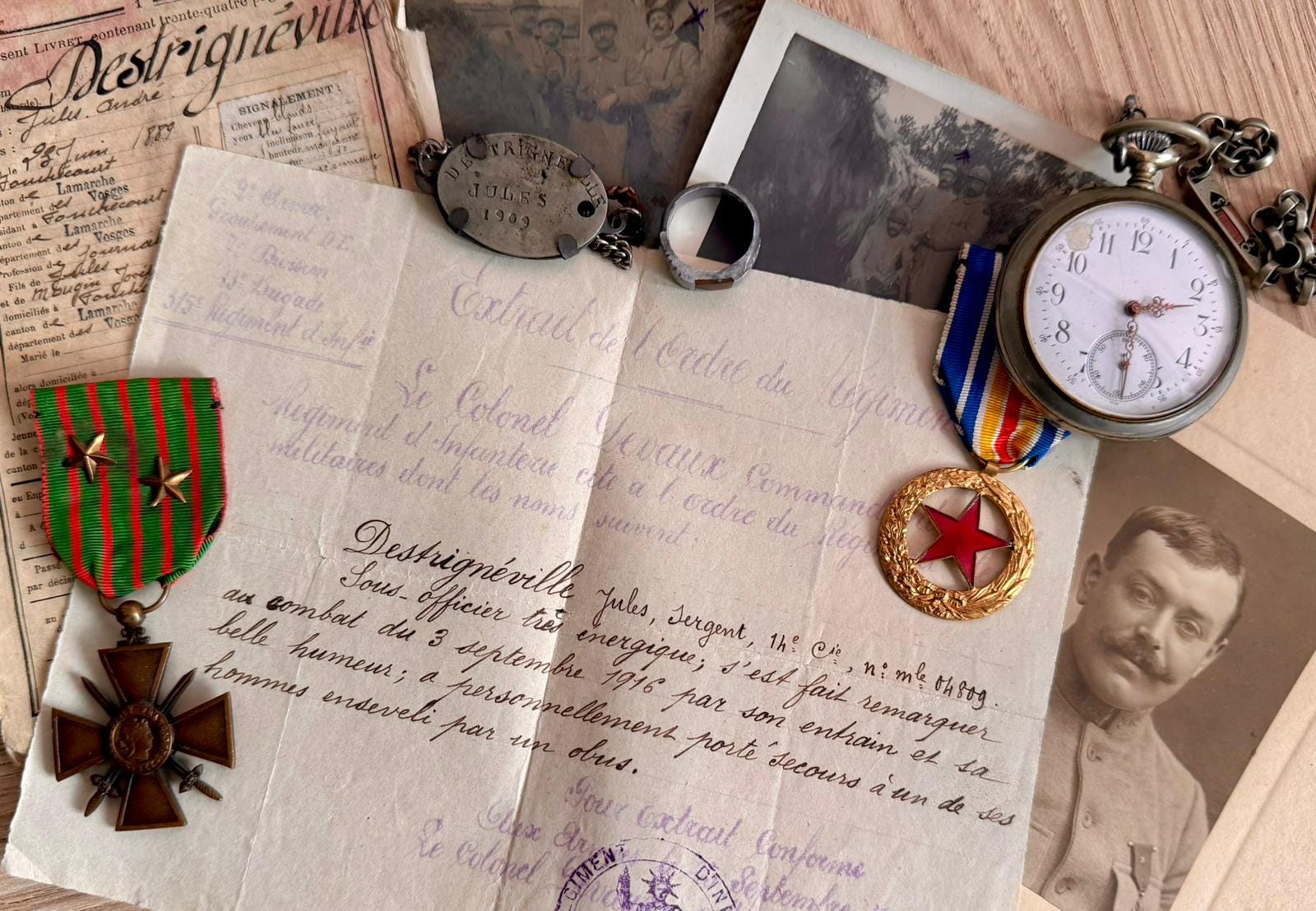
One hundred and ten years ago a sergeant of the 315e Régiment d’Infanterie earned his Croix de Guerre at Verdun by pulling a buried comrade from a shell hole. My grandfather earned his recommendation for the same medal a year earlier at Gallipoli, leading the assault on Position 214 under Turkish fire. Both men carried the cross home. Both families still keep the paper and the metal. The ground has grown quiet again. The records have not.